Tooth Luxation and Avulsion in Dogs and Cats
At Eastcott Referrals, our Dentistry, Oral and Maxillofacial Surgery (DOMS) team provides expert care for pets experiencing dental trauma, including tooth luxation and avulsion. These injuries, often resulting from accidents or bites, require emergency and specialised attention to ensure the best possible outcome for your pet, if tooth preservation is desired.
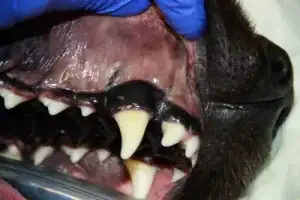
This canine tooth has been displaced outwards and the overlying gum has been torn
Understanding Tooth Luxation and Avulsion
What Are They?
- Tooth Luxation: A partial displacement of the tooth from its socket, which can be lateral (sideways), extrusive (partially out), or intrusive (pushed in).
- Tooth Avulsion: Complete displacement of the tooth from its socket, often referred to as a "knocked out" tooth.
Both conditions are dental emergencies and necessitate immediate veterinary intervention to maximise the chances of saving the tooth.

This radiograph shows the three incisor at the top of the image have been displaced from their sockets
Causes of Tooth Luxation and Avulsion
Common causes include:
- Trauma from accidents, such as being hit by a vehicle.
- Falls from significant heights.
- Bite wounds from other animals.
- Chewing on hard objects like bones or stones.
Clinical Signs to Watch For
- Visible displacement or absence of a tooth.
- Bleeding from the mouth.
- Reluctance to eat or chew.
- Pawing at the mouth or signs of oral discomfort.
Immediate Actions for Pet Owners
If your pet experiences dental trauma:
- Do not touch the root of an avulsed tooth; handle it by the crown (the visible part).
- Rinse the tooth gently with milk (or a buffered solution) if dirty; avoid scrubbing.
- Keep the tooth’s cells alive by placing it in egg white or milk.
- Seek veterinary care immediately; time is critical.
Diagnostic Approach at Eastcott Referrals
Upon arrival, our team will:
- Conduct a thorough oral examination.
- Utilise dental radiographs to assess the extent of injury and check for associated fractures.
- Evaluate the viability of the tooth and surrounding structures.
Treatment Options
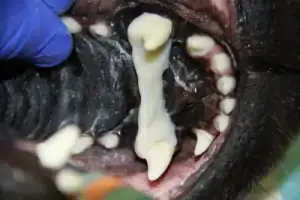
The tooth has been repositioned and a lightweight acrylic splint used to stabilise the tooth
Repositioning and Splinting
For luxated teeth, we may:
- Gently reposition the tooth into its socket.
- Apply a flexible splint to stabilise the tooth for 2–4 weeks.
- Schedule root canal therapy within 10–14 days to address potential pulp necrosis.
Replantation
For avulsed teeth, if presented promptly:

The same teeth have been replaced in the socket. Buttons and wire have been used to stabilise these teeth allowing the torn ligament of the teeth to repair
- Replant the tooth into its socket.
- Stabilise with a splint.
- Administer antibiotics to prevent infection.
- Schedule root canal therapy within 10–14 days to address potential pulp necrosis.
Extraction
If the tooth cannot be saved due to delayed presentation or severe damage, extraction may be the most humane option to alleviate pain and prevent complications.
Post-Treatment Care
After treatment, we recommend:
- Feeding a soft diet to minimise stress on the affected area.
- Restricting chew toys and hard treats.
- Regular follow-up appointments to monitor healing and remove splints.
- Continued oral hygiene practices to support recovery.
Referral Process
Veterinary professionals can refer cases to our DOMS team through our online referral form. Our specialists are also available for consultations to discuss potential cases or treatment plans.