
Complicated Tooth Extractions in Dogs and Cats
At Eastcott Referrals, our Dentistry, Oral and Maxillofacial Surgery (DOMS) team regularly performs complicated tooth extractions in pets with advanced dental challenges. Unlike routine extractions, these procedures demand specialist expertise and careful surgical planning to ensure the best outcomes and avoid potential complications.
Our experienced clinicians use advanced diagnostic and surgical techniques to safely manage even the most complex cases.
What Makes an Extraction Complicated?
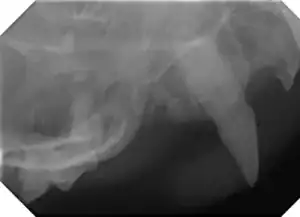
A root fragment has been inadvertently displaced from the socket in to the nasal cavity
While many tooth extractions can be straightforward, certain scenarios significantly increase the difficulty of the procedure. Teeth may become complicated to extract when they are:
- Fractured or brittle, with the risk of leaving root fragments behind
- Ankylosed, meaning the tooth has fused directly to the bone
- Malpositioned or unerupted, making them difficult to access
- Located close to vital structures such as nerves, sinuses or major blood vessels
- Systemic patient factors such as haemophilia or increased anaesthetic risks
In these cases, an elevated level of skill and precision is required to remove the tooth safely and minimise trauma to surrounding tissues.
Diagnostic Process at Eastcott Referrals
Before any complicated extraction, we undertake a thorough diagnostic assessment to ensure the procedure is planned meticulously. This includes:
- Full oral examination, often under general anaesthesia for patient comfort and to enable detailed assessment
- High-quality dental radiographs, essential for viewing roots and surrounding bone
- Advanced imaging (such as CT scans), particularly in complex or high-risk cases
This careful preparation allows us to anticipate challenges and reduce the likelihood of complications during surgery.
Treatment and Surgical Techniques
Each complicated extraction is approached with care and attention to detail. Techniques we use include:
Surgical Extractions
When simple extraction methods are not possible, we use surgical approaches. This may involve:
- Creating a flap in the gum to gain better access
- Removing bone to release the tooth or root
- Sectioning the tooth into smaller pieces to allow easier removal
Root Tip Retrieval
Where root fragments are left behind (due to fracture or brittleness), special techniques and instruments are used to carefully extract these without damaging surrounding tissues.
Managing Intraoperative Complications
On occasion, complications such as development of an oro-nasal fistula (abnormal connections between the mouth and nasal cavity) or jaw fractures may affect vets performing routine extractions. Our team is equipped to manage these using advanced surgical repair methods to protect the patient’s health and comfort.
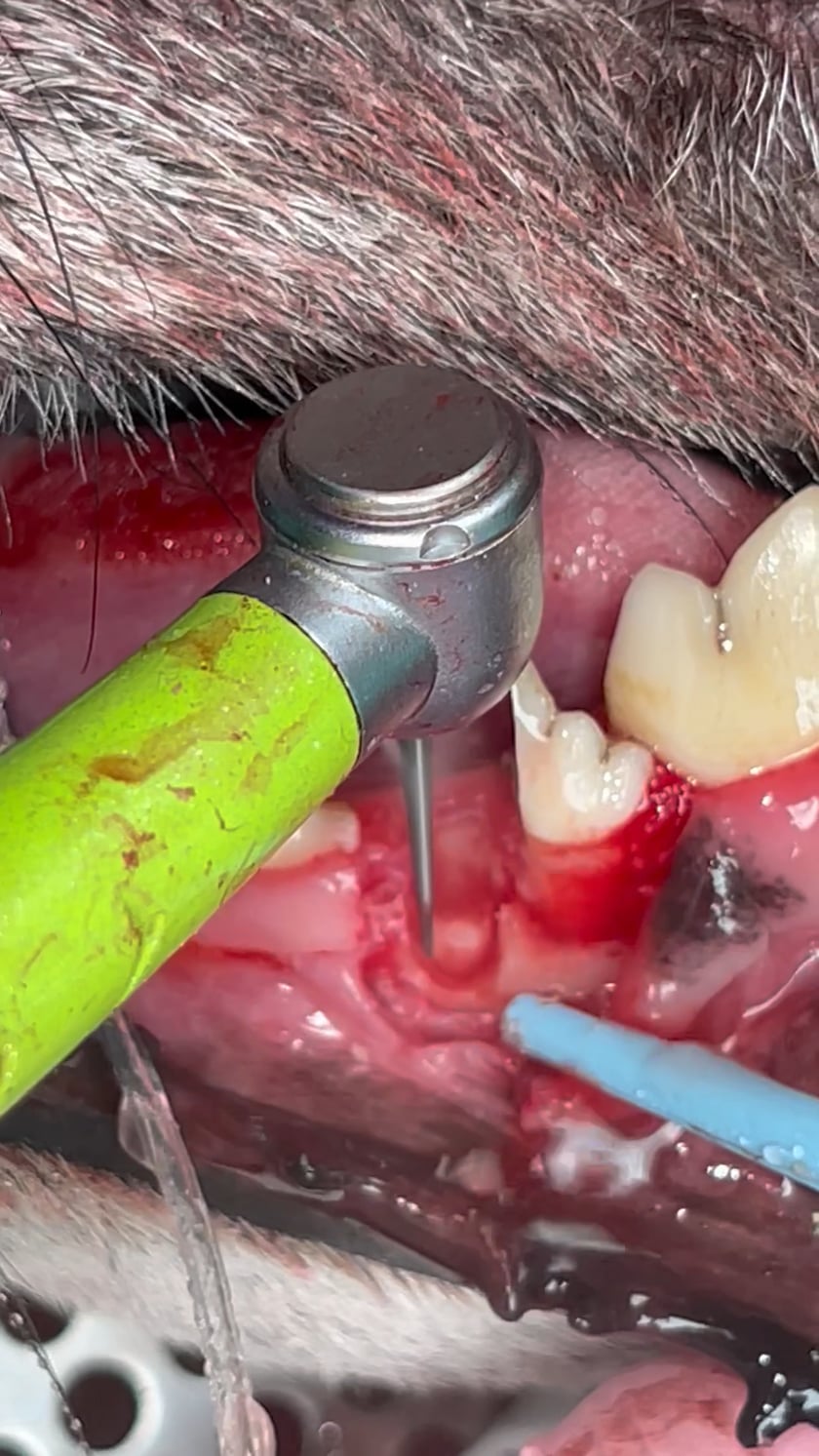
Here a lower premolar root has fractured and the remaining root is being dissected carefully using a root tip bur
Recovery and Aftercare
Following a complicated extraction, our commitment to patient care continues with comprehensive aftercare:
- Effective pain relief, tailored to each patient’s needs
- Antibiotics, only where required, to reduce the risk of post-operative infection
- Soft diet recommendations, to avoid stressing the healing area
- Clear home care instructions for owners to follow during recovery
- Follow-up appointments, to monitor healing and ensure the surgical site has recovered properly
By providing this full spectrum of care, we help pets recover quickly and comfortably.
Referring a Patient to Eastcott Referrals
Complicated dental extractions require specialist skills and equipment. Our Dentistry, Oral and Maxillofacial Surgery team welcomes referrals from veterinary professionals for all complex dental cases, including those involving fractured teeth, ankylosis or teeth with challenging anatomy.
Our team is also available to offer pre-referral advice if required, helping you make informed decisions about your patient’s care.
We work closely with referring vets to ensure each case is handled with precision and compassion, providing excellent outcomes for both patients and owners.