Tooth resorption
At Eastcott Referrals, our Dentistry, Oral and Maxillofacial Surgery (DOMS) team offers specialist care for cats and dogs affected by Tooth Resorption. This painful and progressive condition can have a significant impact on comfort and quality of life, which is why accurate diagnosis and sensitive management are essential.
We provide comprehensive care for affected patients, from thorough assessment to advanced surgical solutions and supportive aftercare.
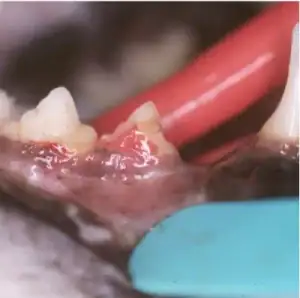
Cat with lower premolar tooth affected by tooth resorption of the crown. The gum is enlarged covering the cavity in the tooth
What is Tooth Resorption?
Tooth resorption occurs when the body’s own cells begin to attack and absorb the hard tissues of a tooth’s tooth and eventually crown.
Over time, resorption will spread and if left untreated eventually destroy much or all of the tooth whilst exposing the nerve inside the tooth and causing discomfort.
The cause of this condition remains uncertain, but factors such as the presence of gum disease, and an excessive response of the “housekeeping” cells of the tooth and bone likely in response to genetic predispositions.
Recognising the Signs
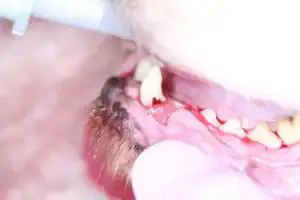
Dog canine tooth with resorption evident just above the gum line
Tooth resorption is unfortunately common and often goes unnoticed in its early stages. Many cats and dogs hide signs of discomfort until the condition is advanced. Possible indicators include:
- Reluctance to eat hard food or a preference for soft diets
- Bad breath
- Pawing at the mouth or showing irritability
- Reduced appetite or weight loss
As the disease progresses, the affected teeth may become fragile, painful and prone to fracturing.
Diagnostic Process at Eastcott Referrals
Accurate and early diagnosis is vital to ensure timely and appropriate treatment. At Eastcott, our approach includes:
- Detailed oral examination under general anaesthesia, allowing us to assess all teeth without causing unnecessary distress
- Dental radiographs (X-rays), which are essential for detecting hidden lesions below the gum line and evaluating root involvement
Through this careful process, we can categorise the stage and type of resorption and plan the most suitable course of action.
Treatment Options
The treatment of tooth resorption is designed to relieve pain, remove affected tissue and prevent progression. Our approach is guided by the severity and type of lesion:
Tooth Extraction or Removal
In most cases, extraction of the affected tooth is the preferred treatment. This completely removes the source of pain and prevents further deterioration. Surgical techniques are employed to remove all or part of the tooth safely and effectively.
Crown Amputation
In very specific cases, particularly where the root is undergoing extensive replacement by bone and there is no infection, crown amputation may be considered. This decision is made only when appropriate and in the best interests of the patient.
Every cat is carefully assessed on a case-by-case basis, and we always discuss the available options with owners and referring vets.
Aftercare and Ongoing Support
Recovery from tooth resorption treatment is usually swift, especially when pain is effectively managed. Our aftercare includes:
- Comprehensive pain relief, ensuring comfort in the days following surgery
- Advice on soft feeding, particularly in the immediate recovery period
- Routine rechecks, to monitor healing and detect any signs of further resorption in other teeth
Because this condition can affect multiple teeth over time, ongoing monitoring and proactive dental care are essential. Our team will provide ongoing advice and work with referring vets to deliver long-term support.
Referring a Case to Eastcott Referrals
Feline tooth resorption requires expert handling to ensure the best possible outcomes for affected cats. At Eastcott Referrals, our Dentistry, Oral and Maxillofacial Surgery team has the knowledge and experience to diagnose and manage even advanced cases with care and compassion.
Veterinary surgeons are welcome to refer cases using our online referral system or to contact us for advice prior to referral. We are here to assist at every stage and are committed to working collaboratively with referring vets and pet owners to ensure outstanding care.