
Fractured or Discoloured Teeth in Dogs and Cats
At Eastcott Referrals, our Specialist Dentistry, Oral and Maxillofacial Surgery (DOMS) team offers expert-led care for pets suffering from fractured or discoloured teeth. These issues can cause significant discomfort and, if left untreated, may result in serious oral and general health problems. Our experienced clinicians are here to provide advanced treatment options tailored to each case, ensuring the best possible outcomes.
Understanding Fractured and Discoloured Teeth

A fractured lower canine tooth with exposure of the sensitive pulp
Fractured Teeth
Broken teeth in pets are often the result of trauma, chewing on hard objects, or existing dental disease. Fractures are classified as either:
- Uncomplicated fractures, where only the outer enamel or dentine layers are damaged.
- Complicated fractures, which expose the inner pulp, potentially leading to pain, infection and tooth death.
Both types require careful assessment to decide the most suitable course of action.
Discoloured Teeth
A tooth that becomes pink, purple, grey or brown may be discoloured as a result of concussive trauma and internal bleeding. This signals in 87-92% of teeth that the tooth is no longer alive (non-vital) and is at significant risk of development of infection. This means the vast majority of discoloured teeth need treatment, root canal or extraction.
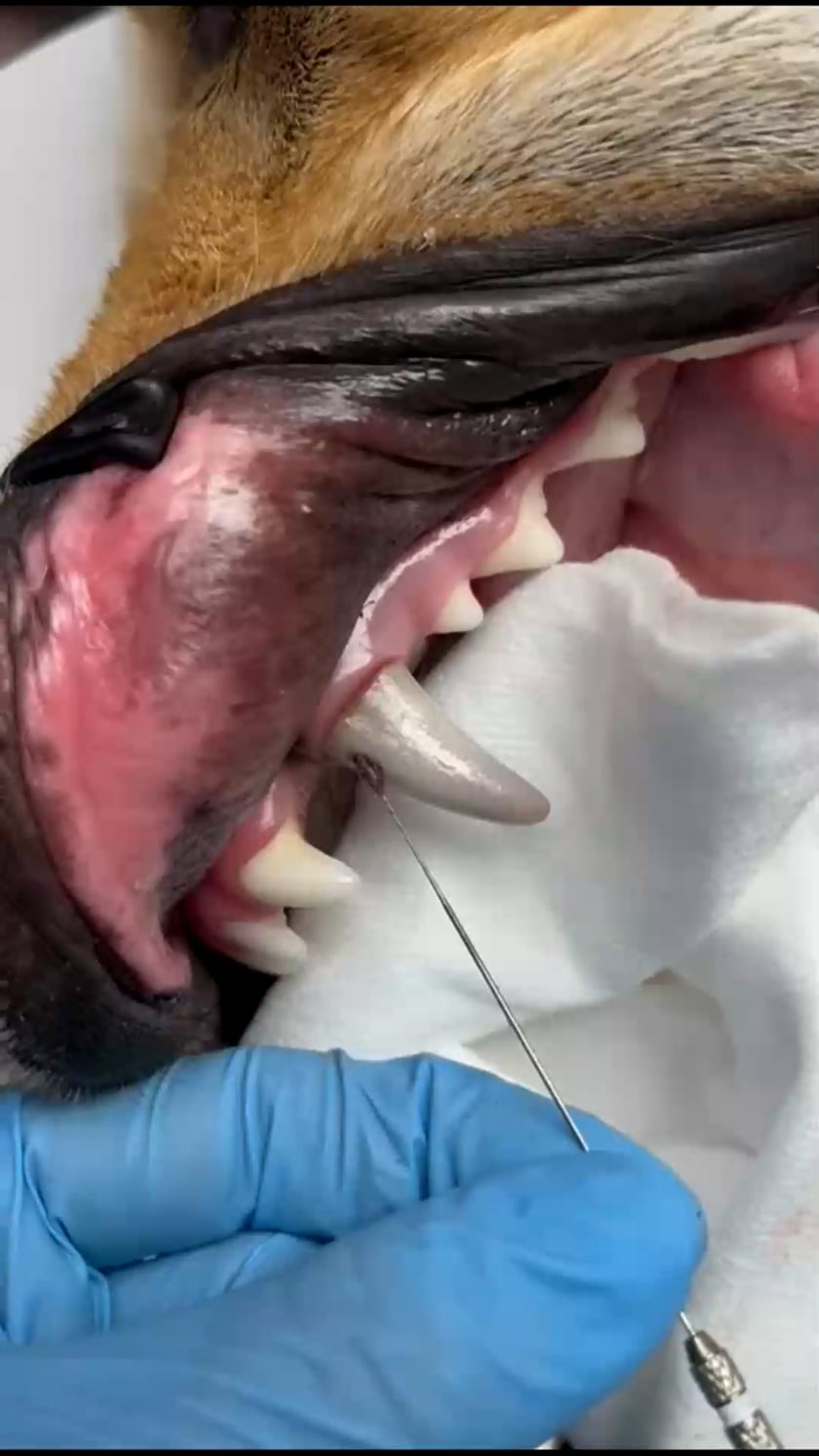
This video shows the removal of a dying pulp from an upper canine tooth that was traumatised. This is done before shaping the tooth with files and then performing a root canal filling
How We Diagnose the Problem
Our approach to diagnosis is thorough and includes:
- Detailed oral examination to check for visible signs of fractures or colour changes.
- Dental X-rays to assess root and bone health beneath the gumline.
- Advanced imaging (such as CT scanning) for complex cases, providing a clear view of the problem area in 3D.
This comprehensive evaluation allows us to recommend the most effective treatment for each patient.
Treatment Options
Root Canal Therapy
Where a tooth is important for function and is suitable for preservation, root canal therapy may be the best option. This specialist procedure involves:
- Removing diseased or dead pulp from within the tooth.
- Thoroughly cleaning and sealing the root canals to prevent further infection.
- Restoring the tooth, often with a protective crown, to ensure continued function.
Root canal treatment is highly successful and enables pets to retain teeth that would otherwise need removal.
Vital Pulp Therapy
If a fracture is identified very soon after it occurs, usually within 72 hours of injury, vital pulp therapy may be indicated. This may be the only treatment option that allows preservation of teeth in animals younger than 1 year of age. This aims to:
- Remove a small amount of the pulp, cutting away any infection.
- Application of a medicated dressing to the cut surface of the pulp.
- Seal the tooth to protect it and avoid infection re-entering.
This option preserves the vitality of the tooth allowing the tooth to continue to develop and maintain sensitivity.
Surgical Extraction
In some cases, extraction is the most suitable or only option. This may be recommended if:
- The tooth cannot be saved due to the severity of the fracture.
- The tooth is non-vital and infected.
- Other treatments are not appropriate for the patient.
Our dentistry team carries out extractions carefully and skillfully to minimise discomfort and promote a smooth recovery, whilst minimising complications.
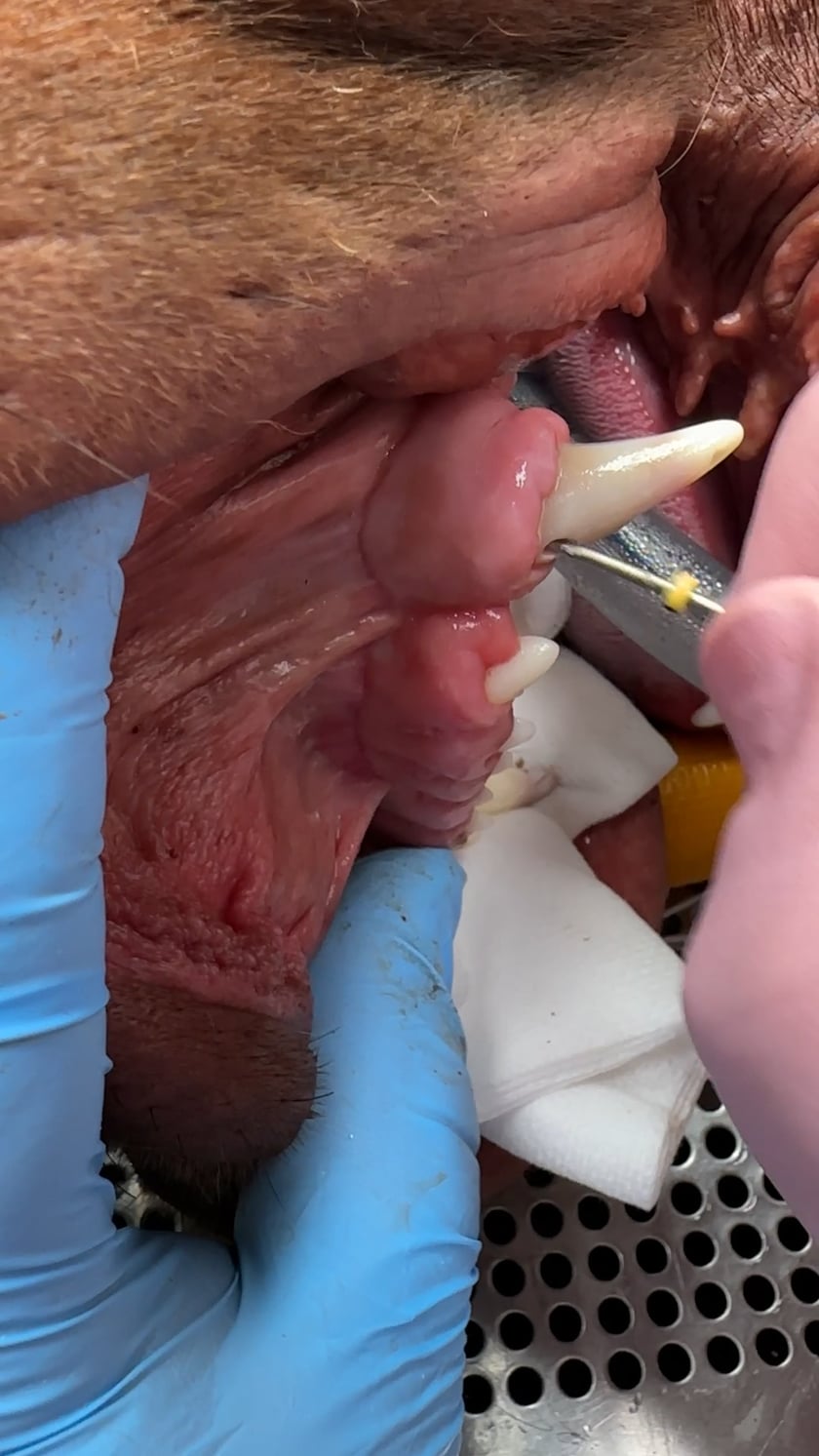
This upper canine tooth had lost its vitality (pulp had died) and is undergoing root canal treatment. Here we are using a file to clean inside the tooth
Post-Treatment Aftercare
Recovery following dental treatment is carefully managed to ensure comfort and success. Aftercare may include:
- Pain relief using appropriate medication.
- Dietary modifications, such as feeding soft food for a short period.
- Restricting chewing on hard objects to protect healing areas.
- Follow-up appointments to monitor healing and ensure the mouth is healthy.
One benefit of root canal and vital pulp therapy is that dietary modification and restriction of access to toys is not needed, which is definitely appreciated by our patients! Our team remains available throughout the recovery process to provide advice and reassurance.
Making a Referral
Veterinary surgeons can refer cases to our Dentistry, Oral and Maxillofacial Surgery team quickly and easily using our online referral form. We are also available to offer advice if you would like to discuss a case before making a referral.
At Eastcott, your patients are in expert hands. We work in partnership with referring vets to ensure the very best care for every pet.
For more information, or to speak with a member of our team, please contact us.