Malocclusions in Dogs and Cats
At Eastcott Referrals, our Dentistry, Oral and Maxillofacial Surgery (DOMS) team provides expert care for dogs and cats with malocclusions. These conditions, where teeth or jaws do not align correctly, can significantly affect comfort, eating habits and overall oral health. Our specialist-led service ensures that every patient benefits from tailored diagnosis and treatment, using advanced techniques and technology.
What is Malocclusion?
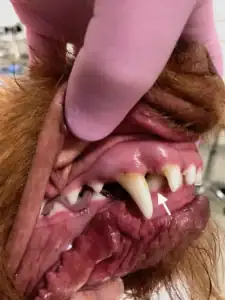
The right lower canine tooth is displaced and when the mouth is closed causing trauma to the soft tissues of the upper jaw
Malocclusion refers to the abnormal alignment of teeth when the jaws are closed. In pets, this can lead to soft tissue trauma, difficulty eating, long-term pain and dental disease, if not addressed.
Malocclusions are generally classified as follows:
- Class I (Neutroclusion): The jaws are aligned properly, but one or more teeth are out of position.
- Class II (Overbite): The lower jaw is shorter than the upper jaw, causing the upper teeth to protrude.
- Class III (Underbite): The lower jaw is longer than the upper jaw, with lower teeth protruding past the uppers.
- Class IV (Asymmetrical or wry bite): The jaws are misaligned on one side, creating an uneven bite.
Understanding the type and severity of the malocclusion is key to deciding the best course of action.
What Causes Malocclusions?
Several factors may contribute to the development of malocclusions, including:
- Inherited traits – Certain breeds are more prone to jaw length discrepancies.
- Retained baby teeth – If deciduous (baby) teeth fail to fall out naturally, they can interfere with adult tooth eruption.
- Trauma during development – Injury to the jaw or face may disturb normal growth.
- Abnormal jaw development – Growth disorders can lead to misalignment.
Early recognition is essential to minimise the impact of these conditions.
Recognising the Signs

The trauma to the upper jaw can be seen as holes in the root of the mouth next to the fang teeth
Malocclusions can often be subtle and clinical symptoms are not always present. Clinical signs to be aware of may include:
- Difficulty grasping or chewing food
- Reluctance to eat or chew hard items
- Excessive salivation
- Pawing at the mouth
- Bad breath
- Visibly misaligned teeth or jaws
A prompt referral to our dental specialists is advised if any of these symptoms are noticed.
Diagnosis at Eastcott Referrals
Our approach to diagnosing malocclusion is detailed and comprehensive. It includes:
- Full clinical oral examination under sedation or general anaesthetic
- Dental radiographs to assess root positions and jaw structure
- Advanced imaging, such as CT scanning, when required for complex or surgical cases
We work closely with referring vets to ensure a clear understanding of the condition and the available treatment options.

An inclined plane which has been bonded, temporarily, on to the teeth to guide the lower canine teeth into a non-traumatic position
Treatment Options
Treatment plans are fully individualised and may include one or more of the following:
Orthodontic Correction
Custom-made appliances can gently guide teeth into the correct position over time. This option is considered for functional improvement and patient comfort.
Selective Extraction
Where misaligned teeth are causing pain or trauma, removal may be the best way to prevent ongoing problems.
Crown Reduction and Vital Pulp Therapy
For certain teeth, reshaping (reducing crown height) can help eliminate soft tissue trauma while maintaining the tooth.
Where misaligned teeth are causing pain or trauma, removal may be the best way to prevent ongoing problems.
All treatment decisions are made in the best interest of the patient’s welfare, comfort and long-term health.
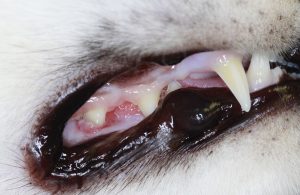
The tips of this cats back, upper premolar tooth is traumatising the gum of the lower jaw. This is intensely painful
Aftercare and Follow-Up
Our commitment to patient care continues after treatment is complete. We provide:
- Pain relief tailored to each patient
- Feeding advice, often recommending softer food during recovery
- Guidance on home care and hygiene
- Regular follow-up appointments to assess healing and ensure success
We also support referring vets with clear updates and advice for ongoing care after discharge.
Referring a case
Our Dentistry, Oral and Maxillofacial Surgery team is here to help with cases of malocclusion that require specialist input. Veterinary surgeons can refer patients easily using our online referral form, or contact us directly to discuss cases in advance.
Together with our referring colleagues, we aim to deliver the highest level of care and the best possible outcomes for every patient.
To find out more or make a referral, please visit our Dentistry, Oral and Maxillofacial Surgery department page.