
Categories
Ever wondered how much teamwork goes into getting the right diagnosis from a CT scan of the chest?
Ever wondered how much teamwork goes into getting the right diagnosis from a CT scan of the chest?
When we perform a CT scan of the chest lung inflation matters more than most people realise. Sometimes areas of the lung can appear dense or “abnormal” simply because they’re not fully expanded. This is called atelectasis, meaning part of the lung has temporarily collapsed or isn’t properly inflated, which is common under general anaesthesia. Atelectasis can mimic more serious findings, such as pneumonia, or obscure cancer spread (metastasis).
This is where our anaesthesia team plays a crucial role in supporting our imaging team in interpreting the scan, making a real difference.
A recruitment manoeuvre is a gentle, carefully controlled technique used during anaesthesia to increase lung inflation and fully open the lungs. Think of it like inflating a slightly crumpled balloon so we can see its true shape.
This simple step can prevent misdiagnosis and unnecessary worry or treatment.
In these images:
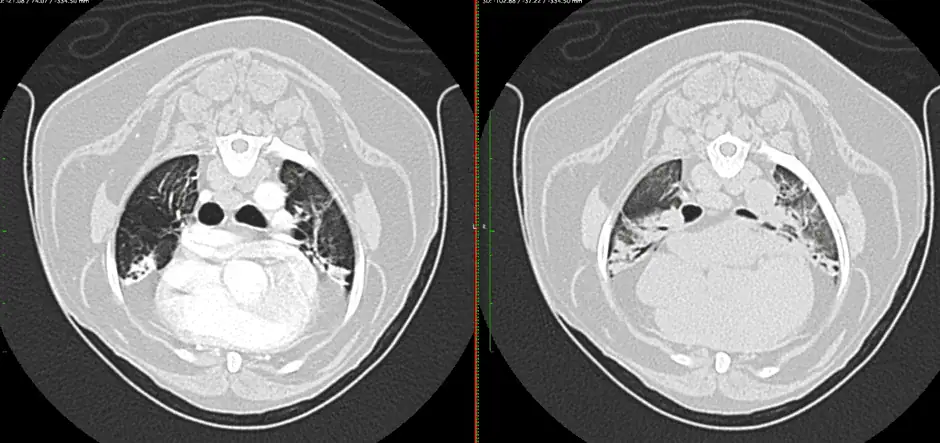
• Right: a partially collapsed (atelectatic) lung that can look concerning
• Left: the same lung after recruitment — nicely inflated, showing no disease.
Recruitment manoeuvres must be performed safely. If not carefully controlled, they can cause complications such as air leaks (pneumothorax) or affect the heart and blood pressure. That’s why a skilled anaesthesia team is essential—they ensure the lungs are optimally inflated without putting the patient at risk.
It’s a great example of how behind-the-scenes our anaesthesia and imaging teams help us get clearer answers and better care for our patients
#VeterinaryCare #VeterinaryAnaesthesia #CTScan #PatientSafety #Teamwork#Eastcottreferrals