
Categories
Laparoscopic Gall Bladder removal
Gall Bladder removal
Gall bladder mucocele (GBM) is becoming increasingly commonly diagnosed in canine patients.
The decision to remove the affected gall bladder is usually straight forward if the patient is showing clinical signs that will be improved following surgery. However, if the animal is not currently showing any obvious symptoms it can be harder to opt for surgery, as owners may be concerned about the risk of postoperative complications. Left untreated, gall bladder disease can progress to either obstructing the bile ducts or even rupture, leading to biliary peritonitis. A recent study (Frieson 2021) showed that the mortality risk for elective gall bladder removal is approximately a quarter that of non-elective surgery, so there is a strong case for offering early surgical intervention in these cases.
Laparoscopic surgery available at Eastcott
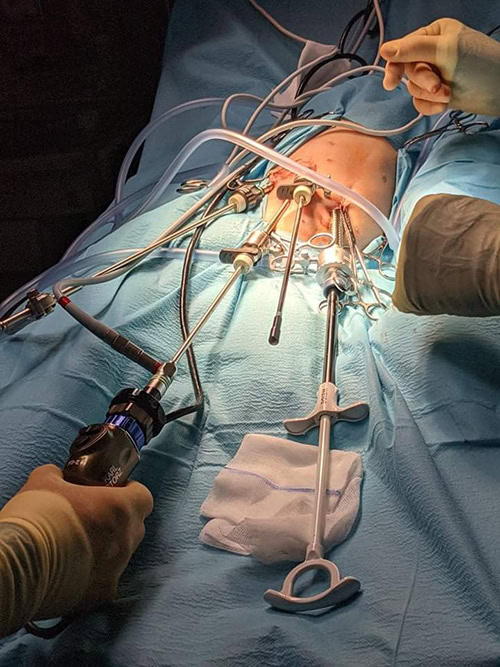
Although removal of a gall bladder (cholecystectomy) is most often performed via an open surgical approach, it is now possible to remove gall bladders using laparoscopy using very similar techniques to those used in humans.
The advantages of this technique include smaller wound size (typically 2-3 5mm wounds and one 10mm wound), increased patient comfort, quicker recovery and return to normal activity. Laparoscopy therefore provides an ideal way to remove early GBM in a minimally invasive way.
Not all cases of GBM are suitable for laparoscopy. Cases that have already progressed to biliary tract obstruction or cases of gall bladder rupture are usually better dealt with by open surgery. Our team of experienced surgeons would be happy to discuss the suitability of any potential case with you and we are happy to offer either keyhole or open surgical approaches to managing gall bladder disease here at Eastcott.
At Eastcott, we have amassed huge experience in keyhole surgery and now routinely remove gall bladders using keyhole surgery.
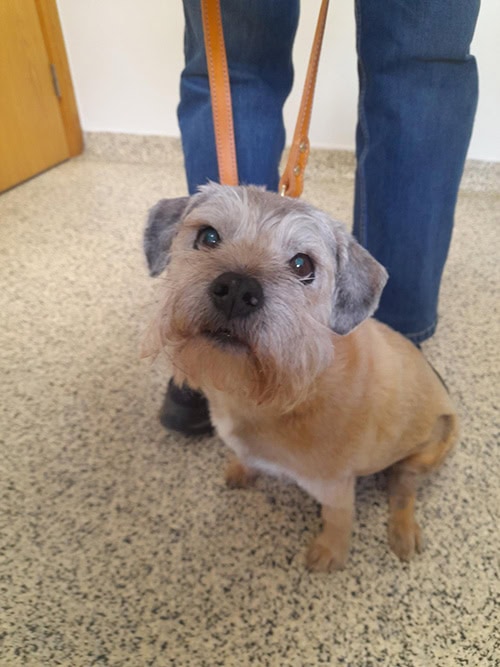
Case example: “Flossie”
Flossie is an 11 year old female Border Terrier who presented to our medicine service for assessment of intermittent vomiting and raised liver figures on blood tests. Ultrasound had detected an early gall bladder mucocele and thickening of sections of her bowel suggestive of a chronic enteropathy. Flossy’s enteropathy is being managed with a hypoallergenic diet and the decision was made to also remove the gall bladder as biliary mucocele can also cause regurgitation and chronic abdominal pain. A laparoscopic cholecystectomy was performed and Flossy was discharged the next day. She has since fully recovered and is doing very well indeed. In fact, her owners report that she is brighter than she has been for a long time and even broke into a trot whilst out on a walk! Laparoscopy provided a minimally invasive option for Flossy and allowed this older dog to bounce back from surgery very quickly indeed.
Soft Tissue Specialists – here to help
We therefore recommend laparoscopic surgery for cases of either early gall bladder disease or where the disease may have been found incidentally but where there are concerns that, if left, the disease could progress and cause significant disease.
At Eastcott our experienced team of surgeons would be happy to discuss suitability of any cases that you may feel would benefit from either open or laparoscopic cholecystectomy. We offer a fixed price for this procedure including consult, surgery, aftercare (hospitalisation, medications) and laboratory investigations which is a genuine “all-in” fee of £4400.
Contact us at [email protected]
Did you know? It’s not just gall bladder removal that we can do using keyhole surgery. We also remove small abdominal eg adrenal tumours, remove lymph nodes, take biopsies of internal organs (eg liver), perform keyhole bladder stone removal, remove some thoracic (chest) tumours, pericardiectomy as well as performing spays and gastropexies (protection against GDV or “twisted bowel”).