Minimally Invasive Procedures
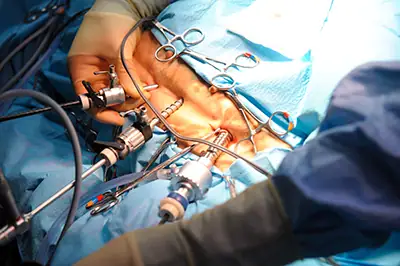 Laparoscopic (abdominal) and thoracoscopic (chest) surgery uses minimally invasive techniques. Small (usually 5mm diameter) instruments are guided within body cavities using specialised cameras and “scopes”. This provides a highly detailed, magnified and well-lit image allowing surgeons to see much more detail than during open surgery and without having to create large incisions.
“Keyhole” surgery reduces postoperative pain and allows for a quicker recovery and faster return to normal activity. This minimally invasive approach also provides a way to gather diagnostic information (e.g. organ biopsies) in geriatric patients many of whom would be considered by their owners to be too frail to undergo open surgery.
Smaller wounds may heal faster and are often associated with a lower risk of postoperative complication than the equivalent “open” surgery. Surgical times are often shorter with minimally invasive surgery and many patients are able to be discharged home the same day as their surgery.
Interventional procedures cover a wide range of techniques
Techniques have evolved to treat diseases that were previously untreatable and/or to treat diseases in a much less invasive and risky way. This is a rapidly evolving area of surgery which Eastcott is proud to be at the forefront of, offering a number of treatments that are not offered anywhere else in the UK.
- Gonadectomy
- Ovariectomy
- Ovariohysterectomy (e.g. pyometra)
- Cryptorchid castration
- Tumour staging (including lymph node removal)
- Organ Biopsy
- Liver
- Pancreas
- Kidney
- Bowel
- Lung lobe
- Lymph node
- Gastropexy (prevents gastric torsion or “GDV” in higher risk breeds/individuals)
- Exploratory surgery
- Cholecystectomy (Gall Bladder removal)
- Adrenalectomy (select cases)
- Pericardiectomy
- Lung lobe biopsy
- Thoracic Duct Ligation (chylothorax).
- Mediastinal Mass Resection